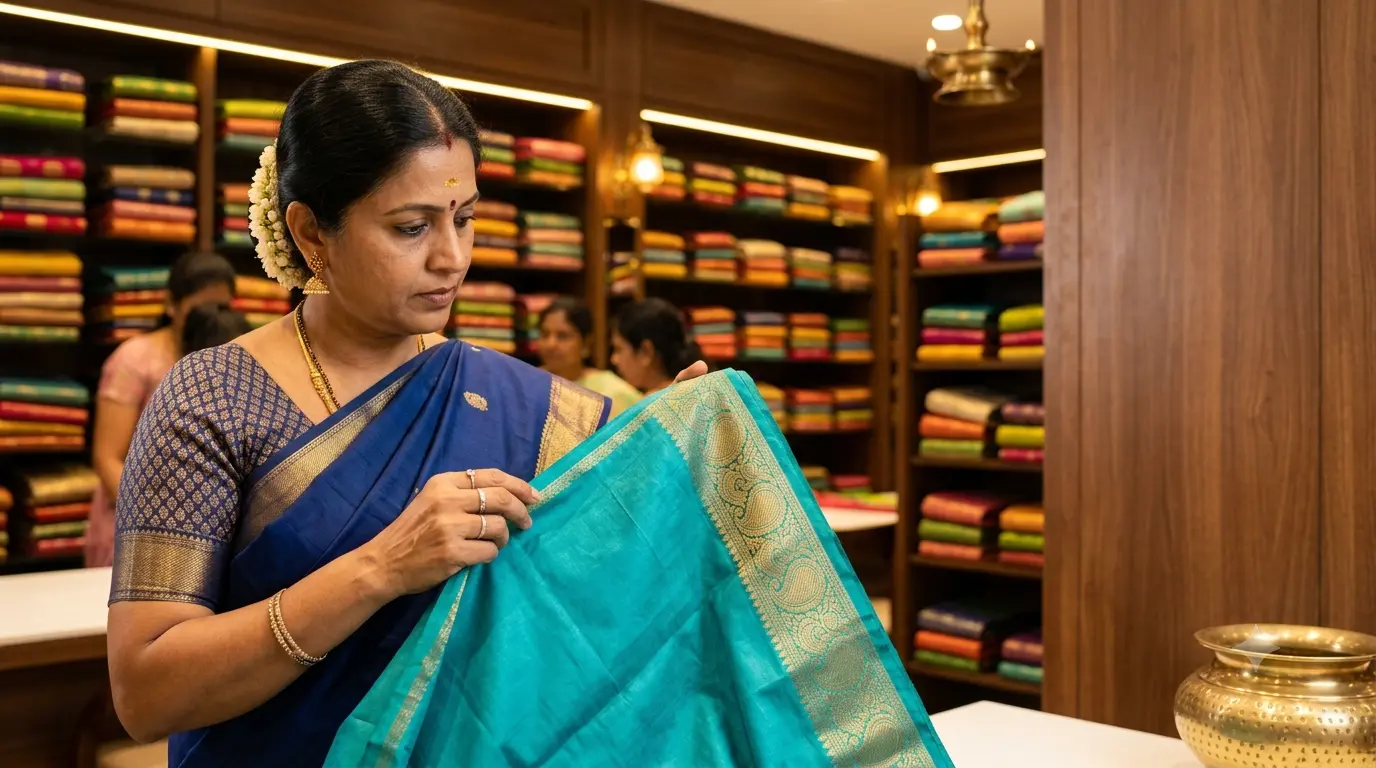
Identifying genuine Handloom Soft Silk Sarees in Sirumugai is an essential skill for smart shoppers, brides, and saree lovers. As synthetic powerloom imitations flood retail markets, knowing how to verify silk yarn purity and handloom weaving authenticity ensures you get true value for your money.
Situated near Coimbatore in Tamil Nadu, Sirumugai is world-famous for producing authentic soft silk sarees. Master weavers use pure mulberry silk and traditional wooden looms to craft these heirloom drapes. Here are 5 proven test methods used by textile experts to identify authentic handloom silk sarees.
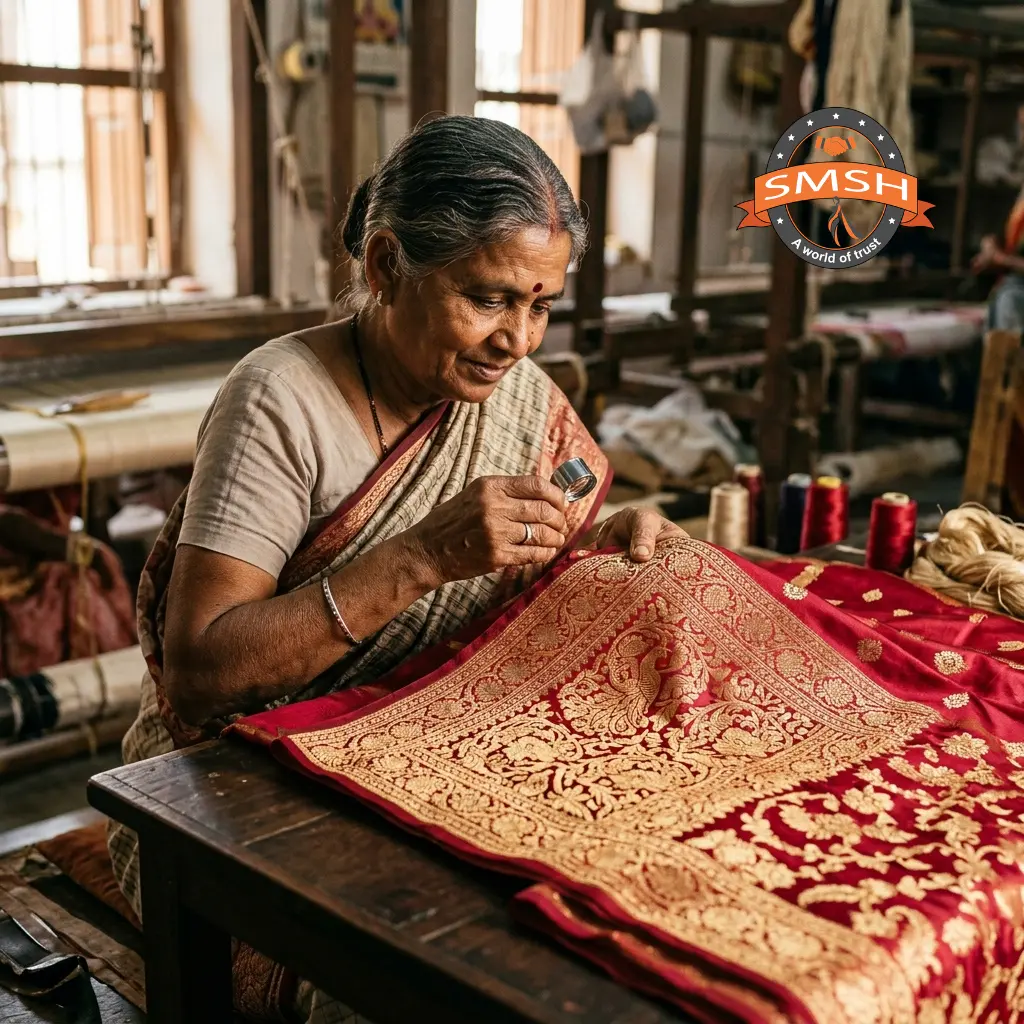
Understanding Authentic Handloom Soft Silk Sarees in Sirumugai
Handloom weaving involves manual shuttle passes on wooden frames. Unlike machine-made polyester imitations, authentic Handloom Soft Silk Sarees in Sirumugai exhibit unique physical characteristics—including subtle selvedge pinholes, friction warmth generation, and certified pure silk fibers.
5 Proven Test Tips for Handloom Soft Silk Sarees in Sirumugai
1. The Official Silk Mark Hologram Tag
The most reliable proof when buying Handloom Soft Silk Sarees in Sirumugai is checking for the official Silk Mark Organisation of India hologram label. This government-backed certification ensures the fabric contains 100% natural mulberry silk yarns without synthetic adulteration.
2. The Palm Friction Warmth Test
Gently rub the silk fabric surface between your palms for a few seconds. Authentic pure mulberry silk generates instant warmth due to its natural protein structure. Synthetic polyester fabrics remain cold and slippery to the touch.
3. Inspecting Handloom Selvedge Pin Holes
Examine the outer edges (selvedge) of the saree. Authentic handloom sarees display tiny, subtle pinholes along the border selvedge where threads were secured to wooden looms during manual weaving.
4. Single Warp Thread Burn Test
If a loose warp yarn thread is burned, authentic silk burns slowly, smells like burning hair, and leaves a soft, crushable black ash. Synthetic polyester threads melt rapidly into hard plastic beads and emit chemical fumes.
5. Natural Luster & Fluid Drape Check
Pure Handloom Soft Silk Sarees in Sirumugai possess a characteristic fluid drape that conforms softly to the body. They exhibit a natural two-tone luster that shifts under light, unlike artificial high-gloss powerloom synthetics.
Why Buy Handloom Soft Silk Sarees in Sirumugai Directly
Applying these 5 test tips guarantees you purchase 100% genuine handloom silk. Sourcing directly from Sri Murugan Silk House ensures certified quality at direct weaver rates. Visit our digital showcase of Browse Silk Sarees Collection or Get in Touch with our team for direct loom inventory inquiries.