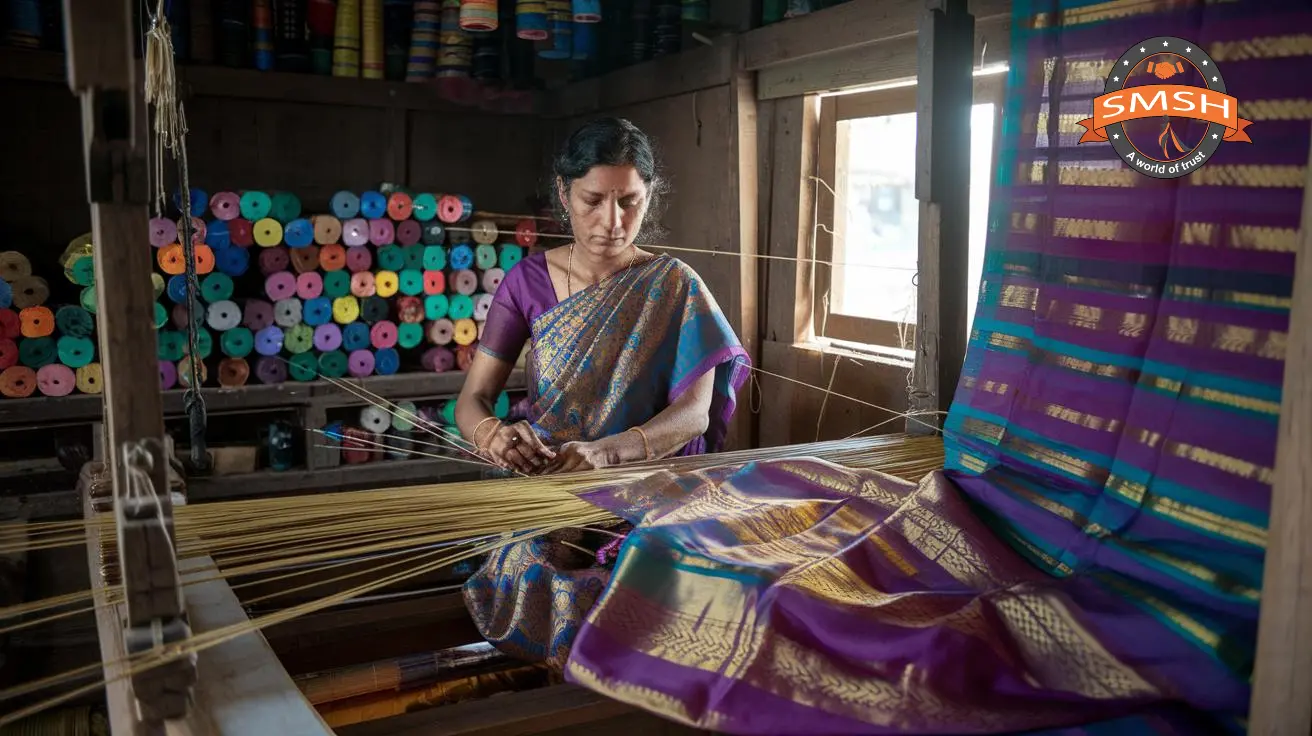
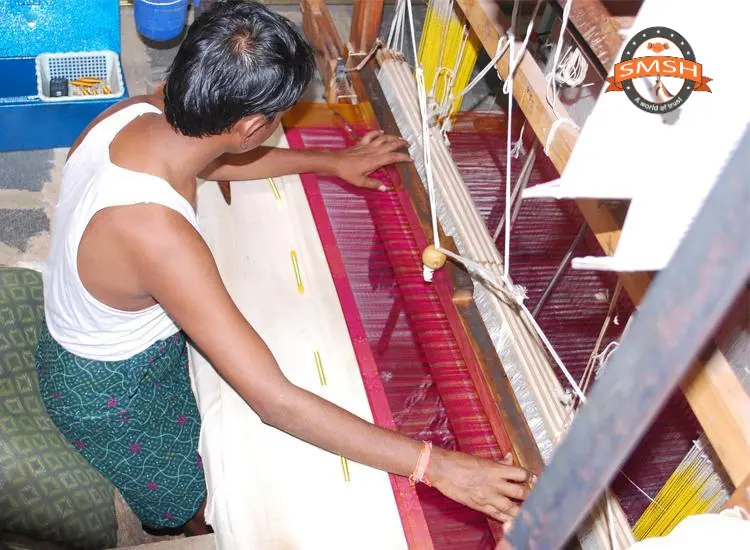
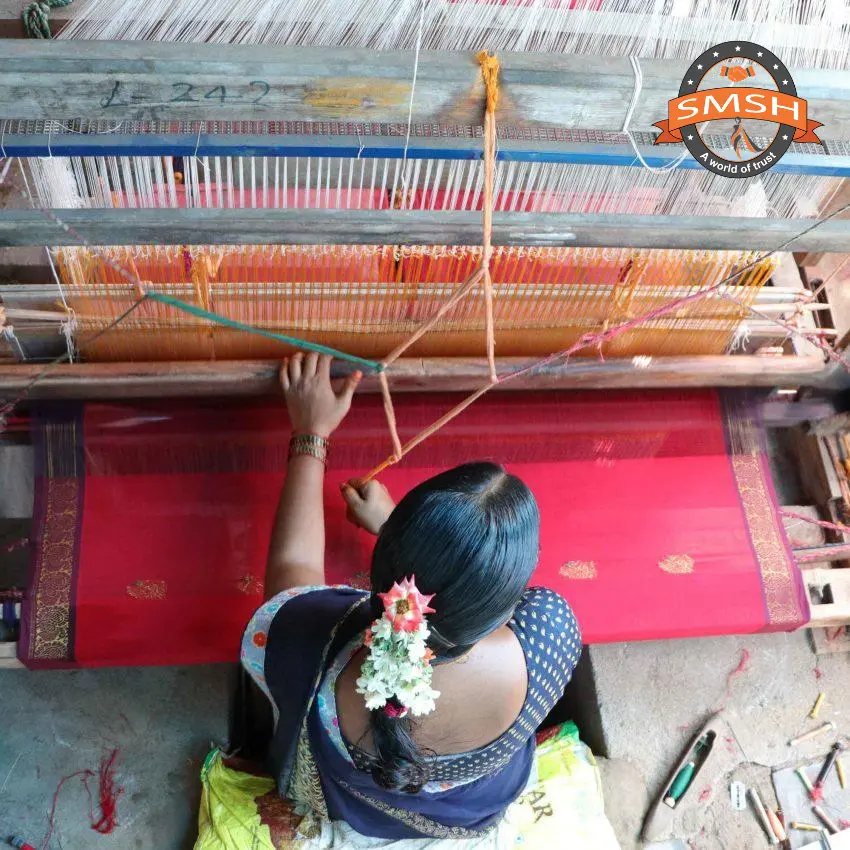
The ancient wooden looms that transform raw silk into living art — a timeless technology of extraordinary precision.
The traditional handloom is one of humanity's oldest and most ingenious inventions. Dating back thousands of years, this remarkable wooden machine creates fabric through an elegant system of interlacing vertical (warp) and horizontal (weft) threads — entirely powered by human hands and feet.
At Sri Murugan Silk House, our weavers work on traditional pit looms and frame looms from the comfort of their own homes. These are not factory machines — they are personal tools that each weaver tends to with the same care they give their craft, passed down through generations.
The beauty of the traditional handloom lies in its simplicity and its capacity for infinite complexity. The same basic mechanism that was used centuries ago still produces the most intricate silk sarees in the world today — because human hands, guided by human creativity, have no mechanical equal.
Sturdy teak or rosewood frame — built to last generations
Holds the vertical warp threads under tension
Controls thread separation and weave density
Carries the weft thread across the warp shed
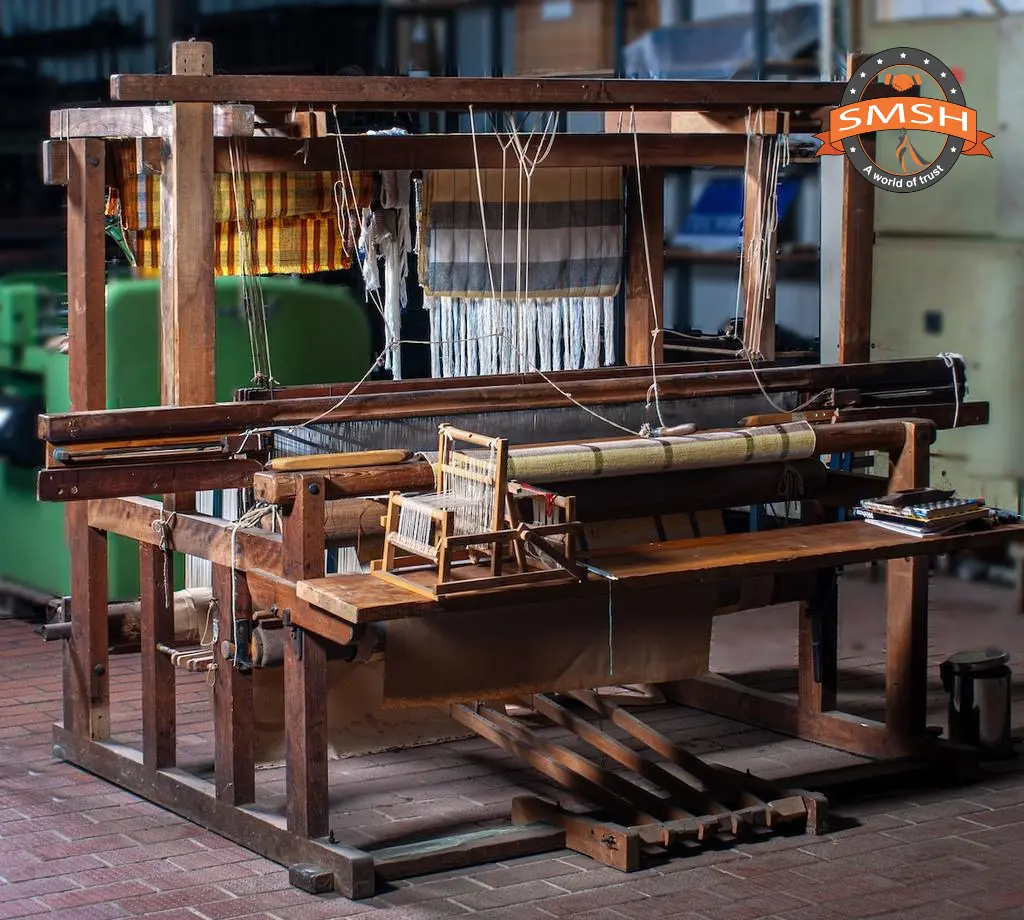
A simple, brilliant mechanism that transforms threads into fabric through perfectly coordinated human movements.
The weaver presses foot pedals to raise alternating groups of warp threads, creating a triangular opening called the "shed" through which the shuttle passes.
The shuttle carrying the weft thread is thrown horizontally through the shed opening, depositing one row of weft across the full width of the saree.
The reed swings forward to pack the newly inserted weft thread tightly against the previous row, building up the fabric weave row by row.
As fabric is woven, it is wound onto the cloth beam at the front of the loom — gradually rolling up the finished saree as the weaver progresses.
Each component of the traditional handloom plays a critical role in creating the perfect saree weave.
The shuttle is the heart of weaving action — a sleek, boat-shaped wooden tool that carries the weft thread bobbin. It is thrown across the loom at speed, passing through the shed of warp threads to deposit one row of weft with each pass.
Traditional shuttles are made from smooth, dense hardwood — often seasoned teak — shaped to glide effortlessly across the warp threads. For different types of sarees, different shuttle sizes and weights are used.
The warp beam is a horizontal cylindrical roller at the back of the loom that holds the supply of warp threads. Hundreds or even thousands of silk threads are wound onto this beam and kept under even tension throughout the weaving process.
The arrangement of threads on the warp beam directly determines the saree's width, thread count, and the basic structural pattern. Setting up the warp beam correctly is a skilled process that can take an entire day for complex designs.
The reed is a comb-like frame through which the warp threads pass, used to beat each weft row into place and maintain consistent thread spacing. The number of dents per inch in the reed determines the saree's thread density.
The heald (or heddle) shafts are frames with wire loops through which individual warp threads are threaded. When the weaver presses foot pedals, different heald frames rise and fall — separating the warp threads into the upper and lower shed that the shuttle passes through.
The traditional handloom is far more than a machine — it is a cultural institution, an economic lifeline, and an artistic medium unlike any other.
Unlike power looms, the handloom allows unlimited design complexity. A master weaver can create patterns impossible for any machine to replicate — with infinite variation, depth, and precision.
Handloom weaving consumes no electricity and produces zero industrial waste. It is inherently sustainable — the most eco-friendly form of textile production in the world.
Each saree bears the unique touch of the weaver — slight variations that mark genuine handwork. This human element gives each piece its soul and distinguishes it from mass production.
The handloom industry supports millions of artisan families across India. Each home loom is a livelihood — sustaining not just one person but entire families and communities.
The handloom carries centuries of cultural knowledge — patterns, techniques, and artistic traditions that have been refined across generations and represent India's living heritage.
Handloom sarees are inherently premium products. The density, texture, and durability of handwoven silk exceeds power loom output — a quality that connoisseurs recognize and cherish.
Understanding what makes traditional handloom weaving irreplaceable in an age of modern textile manufacturing.
| Feature | Traditional Handloom | Modern Power Loom |
|---|---|---|
| Quality | Superior — dense, rich, durable | Standard — uniform, less dense |
| Design Range | Unlimited complexity & variation | Limited to programmed patterns |
| Environmental Impact | Zero electricity — eco-friendly | High energy & industrial waste |
| Uniqueness | Each piece is one-of-a-kind | Identical mass-produced output |
| Artisan Value | Preserves craft & culture | Replaces artisan employment |
| Cultural Significance | Living heritage, centuries old | Industrial product — no heritage |
| Sri Murugan Silks | ✓ Our standard | ✗ Not used |
"We are proud to work exclusively with traditional handloom machines. This is not just a production choice — it is our commitment to authenticity, sustainability, and the artisans who keep this tradition alive."
See the Weaving Process →Every saree we create is made on these traditional looms, by master weavers who have dedicated their lives to the craft.